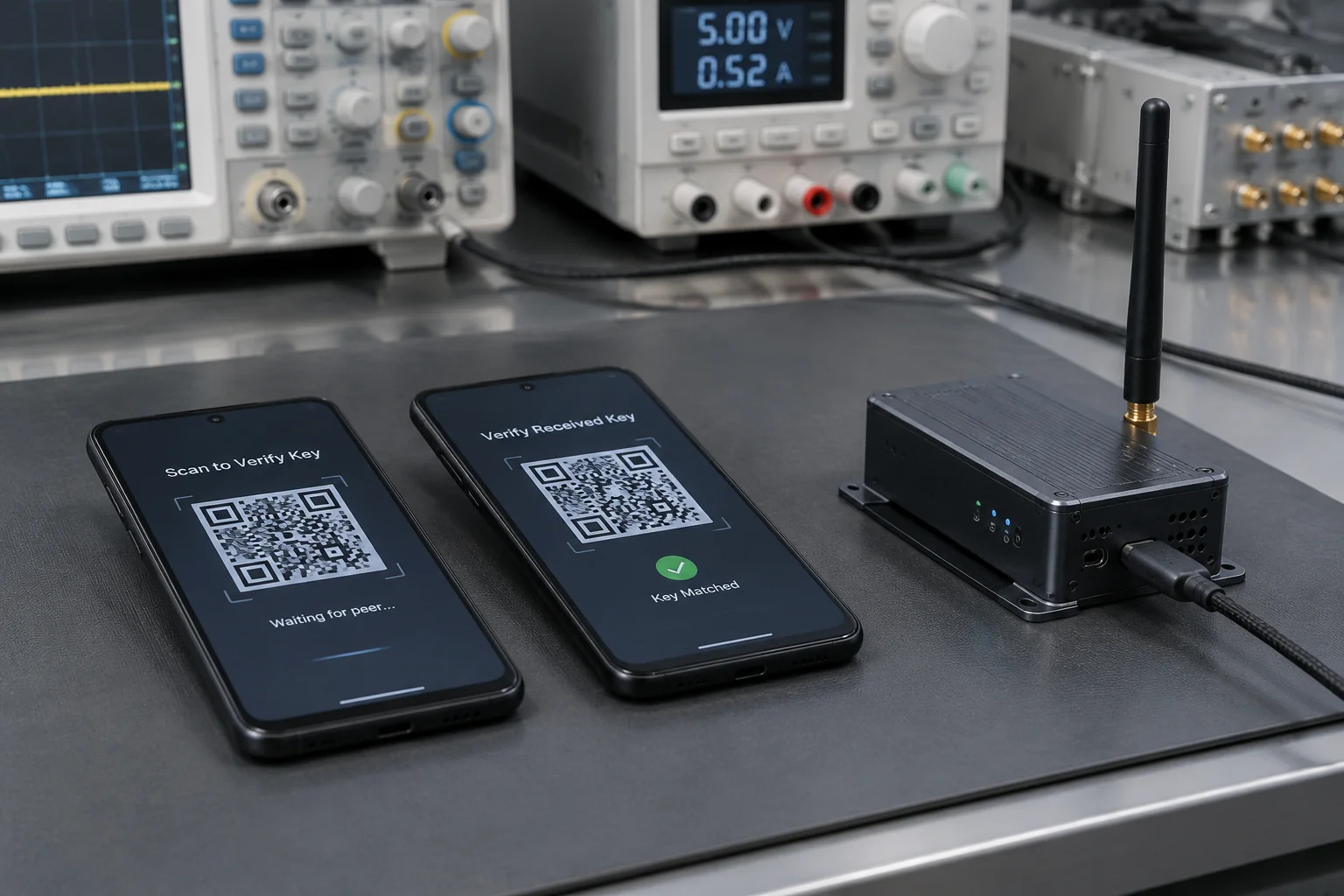
1. Threat Model Reality: Payload Confidentiality vs. Metadata Graph Exposure
Evaluating an encrypted messenger solely by asking whether it uses AES-256 or ChaCha20-Poly1305 fails modern operational security (OPSEC) auditing. By 2026, symmetric cipher strength is rarely the weak link in serious communication tools. Real-world compromises occur across four structural surfaces outside raw block-cipher encryption:
- Default vs. Opt-In Key Custody: Platforms marketed as "encrypted" frequently terminate transport encryption on provider-controlled cloud load balancers, storing plaintext or server-decryptable message databases unless both participants manually invoke device-bound secret sessions.
- Social Graph & Identifier Correlation: Even when message payloads are cryptographically opaque, requiring an E.164 mobile phone number (
+1...), leaking subscriber IP addresses during WebRTC voice setup, or replicating room membership tables across federated servers allows adversaries to map organizational hierarchies, P2P cryptocurrency trade counterparties, and journalistic sources without decrypting a single byte. - Harvest Now, Decrypt Later (HNDL) Quantum Capture: State-level passive taps recording encrypted session handshakes on submarine cables and exchange points can archive classical
X25519key agreements today for retrospective decryption once cryptanalytically relevant quantum computers (CRQCs) mature, unless sessions enforce hybrid post-quantum key encapsulation (ML-KEM, NIST FIPS 203). - Push Wakeup & Endpoint Forensics: Mobile operating systems aggressively suspend background sockets, forcing most messengers to wake devices via Google Firebase Cloud Messaging (
FCM) or Apple Push Notification service (APNs). Every push ping creates a timestamped Google or Apple metadata record correlated with the device hardware token unless the client supports UnifiedPush, persistent Tor circuits, or OS-level sandboxing on Hardened Mobile Operating Systems.
This flagship technical reference audits 12 widely deployed messaging protocols against verifiable cryptographic specifications, transport metadata exposure, build reproducibility, and blackout survival. It also preserves and upgrades eight archival technical reviews cited by English Wikipedia, GNU Jami, healthcare GDPR compliance auditors, and decentralized web archives.
2. Cryptographic Ratchet Architectures in 2026
End-to-end encryption protocols are defined by two temporal security guarantees: Forward Secrecy (FS), ensuring that compromise of long-term identity keys today cannot decrypt past recorded ciphertexts, and Post-Compromise Security (PCS) (self-healing), ensuring that temporary state theft heals automatically once an attacker loses active man-in-the-middle position.
2.1 Signal Protocol: From X3DH + Double Ratchet to PQXDH and SPQR
For a decade, the Signal Protocol specifications combined Extended Triple Diffie-Hellman (X3DH) asynchronous session setup with the symmetric/DH Double Ratchet. While X3DH and X25519 ratcheting defeated classical passive adversaries, every initial prekey bundle remained theoretically vulnerable to future Shor-algorithm discrete-logarithm recovery.
Signal addressed this in two distinct cryptographic upgrades:
PQXDH(Post-Quantum Extended Diffie-Hellman): Replaces pure elliptic-curve prekeys with a hybrid key agreement combining fourX25519Diffie-Hellman exchanges and a post-quantumML-KEM-1024(formerly Kyber-1024) encapsulation against signed last-resort or one-time PQ prekeys. Session root keys are derived viaHKDF-SHA512over the concatenation of both secrets, guaranteeing confidentiality so long as eitherX25519orML-KEMholds.SPQR(Sparse Post-Quantum Ratchet): Because post-quantumML-KEMpublic keys (1,184to1,568bytes) and ciphertexts are roughly37xto49xlarger than32-byteX25519points, sending a full KEM public key inside every chat message would penalize low-bandwidth mobile links.SPQRsolves bandwidth amplification via chunked, erasure-coded post-quantum ratchet epochs braided into the classical Double Ratchet (Triple Ratchet), restoring continuous post-compromise quantum healing without breaking mobile SMS-grade latency budgets.
2.2 IETF MLS (RFC 9420): Logarithmic TreeKEM for Large Groups
Historically, group E2EE protocols struggled with a fundamental scaling trade-off:
- Client-Side Pairwise Fan-Out (
OMEMO, legacy MatrixMegolmkey distribution): Every member maintains pairwise sessions with every other device in the room. Rotating group keys after a member removal requiresO(N)encryptions, stalling mobile clients once rooms exceed several hundred devices. - Sender Keys (
Signal Groups v2): FastO(1)message broadcast, but achieving clean post-compromise healing across asynchronous device additions and removals requires complex server-verified zero-knowledge group state (zkgroup).
Published by the IETF in July 2023 and increasingly deployed across enterprise and federated ecosystems (including Element X / Matrix 2.0 initiatives and Wire) in 2025-2026, RFC 9420: Messaging Layer Security (MLS) organizes group devices as leaves of an asynchronous binary ratchet tree (TreeKEM). When any leaf rotates its secret path to the root, it encrypts path secrets only to the O(log2 N) copath subtrees. In a 10,000-device room, key updates require roughly 14 public-key operations instead of 10,000, while enforcing strict transcript consistency and supporting hybrid PQ cipher suites (X25519Kyber768Draft00 / ML-KEM extensions).
2.3 XMPP OMEMO 2 (XEP-0384) vs. Matrix Olm/Megolm (vodozemac)
Within open federated messaging:
- XMPP
OMEMO(XEP-0384): Originated by Andreas Straub and popularized by the Android client Conversations,OMEMOadapts the Double Ratchet to multi-client XMPP PubSub (PEP) bundles. ModernOMEMO 2(urn:xmpp:omemo:2) replaces legacyAES-128-GCMtruncated tags withHKDF-SHA256,AES-256-CBC+HMAC-SHA256-128(orAEADprofiles) and signed XEdDSA prekeys (XEP-0420Stanza Content Encryption), preventing server-injected stanza spoofing. - Matrix
vodozemac(Olm+Megolm): Matrix migrated away from its unmaintained C++libolmlibrary tovodozemac, a memory-safe Rust implementation audited by Cure53. PairwiseOlmchannels negotiate per-senderMegolmoutbound ratchet sessions for rooms, paired with cross-signed Ed25519 master/device/user-signing keys. However, Matrix servers still retain plaintext event metadata (sender MXID, room ID, server timestamps, and federated state DAG edges) unless rooms move to specialized P2P overlays.
2.4 Identifier-Free Queue & Mesh Topologies: SimpleX, Briar, Cwtch, and GNU Jami
The most radical privacy advances eliminate persistent user accounts altogether:
SimpleX(SMP+ Double Ratchet +Streamlined NTRU Prime): Every contact link creates two independent unidirectional queues on user-selectedSMPrelays (Server Afor Alice-to-Bob,Server Bfor Bob-to-Alice), padded to fixed transport block sizes (16 KB) over TLS 1.3 with optional Tor routing and hybrid post-quantumsntrup761+X25519key agreement.Briar(BrambleCryptographic Stack): Uses continuous key rotation over authenticatedBrambletransport frames across embedded Tor v3.onionendpoints (Ed25519service identities), local Wi-Fi LAN multicast/direct sockets, and Bluetooth Classic RFCOMM, requiring zero DNS resolution or cloud rendezvous.GNU Jami(OpenDHT+TLS 1.3/SRTP): Assigns each user anX.509identity certificate anchored in a Kademlia-derived distributed hash table (OpenDHT). Once peers exchange ephemeral ICE/SDP candidates encrypted inside the DHT, media and chat streams flow directly peer-to-peer over mutually authenticatedTLS 1.3andDTLS-SRTP.
3. Empirical 12-Messenger Security & Metadata Matrix (2026)
The table below synthesizes DT.gl's laboratory verification across 12 messaging platforms. Every cell reflects default out-of-the-box protocol behavior rather than marketing claims.
| Messenger / Protocol | Account Identifier | Default E2EE & PQ Status | Metadata & Transport Graph | Topology | Build & Audit Posture |
|---|---|---|---|---|---|
| Signal | Phone number at signup (hidden via usernames) | Yes (100%): PQXDH + SPQR (X25519 + ML-KEM) | Sealed Sender + SGX contact discovery; leaks IP to Signal servers unless proxied | Centralized | GPLv3 client/server; reproducible Android APK; formal academic proofs |
| SimpleX Chat | None (ephemeral pairwise queue IDs) | Yes (100%): Double Ratchet + sntrup761 PQ hybrid | Unidirectional SMP relays; fixed 16 KB cell padding; native Tor (Orbot/arti) | Decentralized Queues | AGPLv3 Haskell/Rust/Kotlin; Trail of Bits (2022/2024) audited |
| Briar | None (local keypair + Tor v3 .onion) | Yes (100%): Bramble QR/link handshake + continuous ratchet | Zero central servers; Tor v3 onion, Wi-Fi LAN, Bluetooth, USB/SD sync | P2P Tor / Local Mesh | GPLv3 Java/Kotlin; Cure53 audited; reproducible builds on F-Droid |
| Conversations (XMPP) | Federated JID (user@domain.tld) | Yes (OMEMO default): Classical X25519 Double Ratchet | Home servers observe JID sender/recipient stanza headers & roster graph | Federated (RFC 6120) | GPLv3 Android reference client; reproducible builds on IzzyOnDroid/F-Droid |
| GNU Jami | None (40-hex SHA-1 of public key on OpenDHT) | Yes (100%): TLS 1.3 / DTLS-SRTP + Git-backed Swarm sync | Direct P2P sockets expose peer IP unless routed via VPN/Tor; TURN optional | P2P (OpenDHT) | GPLv3 GNU package; 100% open daemon (jamid); zero cloud servers |
| Element X / SchildiChat | Federated MXID (@user:server.org) | Yes (Private rooms): vodozemac Olm/Megolm; MLS (RFC 9420) beta | High federation metadata: room DAG state & server participation replicated | Federated (Matrix) | Apache-2.0 / AGPLv3; vodozemac Rust crypto audited by Cure53 |
| Session | None (05... Curve25519 Account ID) | Yes (100%): Session Protocol (simplified envelope; dropped PFS in v1, v2 migrating) | 3-hop Oxen/Session onion-routed service-node swarm hides client IP | Incentivized Onion Swarm | GPLv3; Quarkslab audited; note: lacks Signal-grade per-message DH ratchet in legacy v1 |
| Cwtch | None (Tor v3 .onion address) | Yes (100%): Ed25519/X25519 over Tor v3 + untrusted storage servers | Metadata-resistant multi-party groups via oblivious encrypted storage | P2P Tor v3 + Oblivious Relay | MIT Go/Flutter by Open Privacy Research Society; reproducible builds |
| Delta Chat | Email address or chatmail random relay | Yes (Autocrypt / SecureJoin): rPGP Rust OpenPGP (RFC 9580 path) | Uses standard IMAP/SMTP; chatmail relays enforce strict zero-log TLS & E2EE | Federated (IMAP/SMTP) | GPLv3 Rust core (deltachat-core-rust); multiple Cure53 security audits |
| Movim (XMPP) | Federated JID (user@domain.tld) | Partial: OMEMO supported in 1:1/private chat; public PubSub microblogs unencrypted | Web-pod architecture (PHP/WebSocket) + federated XMPP XEP-0277 social graph | Federated (XMPP + Web) | AGPLv3; self-hostable pod; server pod sees browser session metadata |
| Threema | None (random 8-char Threema ID) | Yes (100%): NaCl (XSalsa20-Poly1305) + Ibex forward-secrecy layer | Minimal server retention (messages deleted upon delivery); Swiss jurisdiction | Centralized | Open-source client apps (reproducible Android); proprietary backend server |
| Telegram | Phone number required (+888 Fragment anon numbers deprecated/costly) | NO by default (Cloud MTProto 2.0); opt-in 1:1 Secret Chats only (0 group E2EE) | Full cloud social graph, group rosters, IP logs & plaintext cloud DB held on servers | Centralized Cloud | Open client source (reproducible builds lagging on iOS); closed-source server |
4. Network Metadata Exposure Topology Diagram
Payload encryption prevents an observer from reading message text, but transport topology determines who knows that Alice spoke to Bob at 03:14 UTC. The diagram below contrasts metadata visibility across the three dominant messaging topologies audited above.
user@domain home servers, and identifier-free pairwise queues or Tor/LAN mesh networks.5. Deep Protocol Evaluations & Operational Trade-Offs
5.1 Signal: Cryptographic Gold Standard vs. Phone-Number Onboarding Friction
Signal remains the baseline recommendation for high-usability, high-assurance mobile and desktop communication because its cryptography is conservative, peer-reviewed, and enabled unconditionally for 100% of calls, chats, and group threads. With usernames (name.01) deployed alongside phone-number privacy toggles ("Who can see my number: Nobody" and "Who can find me by number: Nobody"), Signal users can now exchange contact handles without revealing their E.164 subscriber identity to chat partners.
However, two architectural constraints remain relevant for high-risk threat models:
- Initial SMS/Voice Verification: Creating a Signal account still requires proving control of an E.164 telephone number to Signal's registration service, linking account creation to carrier KYC or burner SIM acquisition.
- Centralized Infrastructure & SGX Reliance: Private Contact Discovery (
CDSI) relies on Intel SGX / confidential-compute enclaves, and transport endpoints reside on major cloud ASNs. When authoritarian censors block Signal's ASN ranges, users must rely on community-run TLSSignal Proxyrelays rather than native decentralized routing.
5.2 SimpleX Chat: Eliminating User Identifiers at the Transport Layer
SimpleX Chat answers a subtle question most federated designers overlooked: does a messaging network actually need user addresses? By replacing alice@server.com with temporary, single-use invitation queues and separate pairwise SMP delivery addresses for every contact relationship, SimpleX prevents cross-conversation correlation. If Alice talks to ten contacts across four SMP servers over Tor (Orbot or embedded arti), no single server possesses an account table listing Alice's ten contacts. Combined with fixed 16 KB transport packet padding, hybrid post-quantum Streamlined NTRU Prime (sntrup761) + X25519 ratchets, and database passphrase encryption at rest, SimpleX provides the strongest internet-routed metadata minimization available in 2026.
5.3 Briar & Cwtch: Internet Shutdown Resilience and Tor v3 Native Groups
During civil unrest, natural disasters, or state-ordered BGP blackouts (documented extensively during the 2022-2023 Iranian telecom shutdowns), every cloud and federated messenger ceases to function the instant international transit is severed. Briar survives total internet blackouts because its Bramble synchronization engine treats Tor, local Wi-Fi, Bluetooth, and removable USB/SD storage as interchangeable epidemic-routing transports. Messages, private group posts, RSS feeds, and crisis forums hop opportunistically from phone to phone within Bluetooth/Wi-Fi range and automatically bridge back onto Tor .onion circuits whenever any peer regains upstream connectivity.
For desktop and cross-platform users who do not need Bluetooth mesh but require metadata-resistant group chats over Tor, Cwtch (developed by the Open Privacy Research Society) runs serverless peer-to-peer 1:1 chats over Tor v3 onion services and implements multi-party groups on untrusted, encrypted storage relays that learn zero group membership or plaintext metadata.
5.4 XMPP (Conversations / Movim) vs. Matrix (Element X / SchildiChat)
Organizations requiring institutional self-hosting under their own DNS namespace (@ops:example.org or ops@example.org) typically choose between XMPP and Matrix:
- XMPP (
Conversations,Dino,Monocles,Movim): Lightweight C/Erlang/Lua server footprint (Prosodyorejabberdcomfortably serves thousands of users on512 MBRAM), mature IETF standards (RFC 6120/6121), low battery consumption viaXEP-0352Client State Indication andUnifiedPush, and rock-solid 1:1 / small-groupOMEMOencryption. Its primary limitation is large-room encrypted history synchronization across newly added devices. - Matrix (
Synapse/Conduit/Tuwunel+Element X/SchildiChat): Engineered around eventually consistent replicated JSON event graphs (DAGs), rich enterprise bridges, VoIP (MatrixRTC/LiveKit), and sliding-sync mobile responsiveness (MSC3575/ native Matrix 2.0 Simplified Sliding Sync). However, federated Matrix rooms replicate structural state metadata permanently across every participating home server, requiring administrators to isolate sensitive rooms (federate: false) and pair endpoints with Encrypted DNS & Network Hardening.
5.5 Endpoint Hygiene: Reproducible Builds, Keyboards, and Push Proxies
Even mathematically sound ML-KEM + X25519 ratchets collapse if the endpoint operating system or app binary is subverted:
- Verify Reproducible Builds: Install Android messengers from verifiable repositories (such as direct developer-signed
Obtainiumfeeds verified viaapksignerSHA-256 fingerprints, F-Droid reproducible builds, or Accrescent) rather than unverified third-party APK mirrors. - Disable Cloud Keyboard Learning & Notification Previews: Third-party cloud keyboards (
Gboardwithout network revoke, SwiftKey) and OS notification listeners capture plaintext keystrokes before the messenger encrypts them and after decryption. Run open-source offline IMEs inside isolated profiles on GrapheneOS or CalyxOS. - Replace Google FCM Where Threat Models Demand: When running de-Googled Android, prefer clients supporting
UnifiedPush(ntfy,NextPush, orConversationsdirect XMPP push) or persistent foreground WebSocket/Tor daemons so wakeups never traverse Google infrastructure.
6. Historical Citation Archive & 2026 Empirical Upgrades
Archival Citation Ledger (2020-2023 Reviews vs. 2026 Lab Verification)
Archival provenance note: Prior to May 2025, legacy URLs on dt.gl hosted independent messaging client reviews cited by English Wikipedia editors, GNU Jami documentation, healthcare GDPR compliance portals, and open-source software repositories. Each archival card below preserves the cited technical context alongside DT.gl's independent 2026 cryptographic verification.
Briar Peer-to-Peer Tor & Mesh Messenger Review (Wikipedia Shutdown Citation)
Cited across 21 referring domains, including English Wikipedia's Briar (software) and Mahsa Amini protests articles, documenting how Briar sustained encrypted civilian communication during national mobile-data blackouts in September 2022 without central rendezvous servers or SMS verification.
2026 Empirical Upgrade: Briar now pairs its Android mesh stack with Briar Desktop (Linux/Windows) and Briar Mailbox, an optional spare-device store-and-forward relay hosted on a user-owned Raspberry Pi or secondary phone over Tor v3 onion services. Mailbox solves Briar's historical simultaneous-online requirement while preserving 100% metadata-free Bramble transport encryption and offline Bluetooth/Wi-Fi/USB crisis synchronization.
XMPP & Conversations Android Client Cryptographic Review
Cited across 44 referring domains including English Wikipedia's Conversations (software) entry. The 2020 review evaluated Daniel Gultsch's reference Android XMPP client, which pioneered mobile-friendly OMEMO multi-end encryption, low-overhead push wakeups, and encrypted HTTP file uploads (XEP-0363).
2026 Empirical Upgrade: Conversations 2.16+ enforces TLS 1.3 channel-binding authentication (SCRAM-SHA-256-PLUS, RFC 9266), encrypted DTLS-SRTP audio/video calls (XEP-0353 Jingle Message Initiation), and UnifiedPush distributor support on de-Googled Android. While OMEMO remains classical X25519 (lacking Signal's post-quantum SPQR layer), self-hosted Prosody + Conversations remains the lowest-resource sovereign federated chat stack in production.
GNU Jami Distributed OpenDHT & Swarm Architecture Review
Cited via dofollow press references across 48 localized documentation editions on jami.net (preserving the exact historical URL slug spelling /messnger-provider-review-2021-jami/). The 2021 assessment examined Savoir-faire Linux's transition of GNU Jami from point-to-point SIP/OpenDHT calling to asynchronous multi-device messaging.
2026 Empirical Upgrade: Jami's Swarm group architecture is now production-hardened across desktop and mobile, storing each conversation as an encrypted, replicated Git commit DAG synchronized directly among participant devices over TLS 1.3 sockets. OPSEC note: because direct P2P ICE negotiation reveals peer IP addresses to connected contacts for low-latency HD video, high-threat users must bind Jami behind an always-on WireGuard VPN or custom TURN proxy.
SchildiChat & Matrix Client Ecosystem Evaluation
Referenced by the IzzyOnDroid Android repository (android.izzysoft.de) as an independent security and usability overview of SchildiChat, a community fork of Element Android offering unified inbox views and granular Matrix power-user controls without proprietary analytics SDKs.
2026 Empirical Upgrade: SchildiChat Next has migrated onto the next-generation Rust matrix-rust-sdk + vodozemac cryptographic core alongside Element X, eliminating legacy Java/Kotlin sync lag via Simplified Sliding Sync and replacing deprecated C++ libolm. Users still inherit Matrix's federated server-graph metadata model, making private home-server hosting and non-federated room ACLs mandatory for confidential teams.
Movim Federated XMPP Social & Messaging Pod Analysis
Preserved on the Arweave Permaweb (archerships.arweave.net) and open-source developer repositories (git.plastiras.org), the 2021 review analyzed Movim's dual role as a browser-based XMPP chat client and federated PubSub microblogging platform (XEP-0277).
2026 Empirical Upgrade: Movim 0.26+ delivers modernized WebRTC Jingle video conferencing and OMEMO browser encryption via WebCrypto, bridging classic instant messaging with decentralized social publishing protocols. Because a Movim web pod acts as a stateful XMPP BOSH/WebSocket proxy between the user's browser and their XMPP server, high-assurance deployments should self-host the Movim daemon on the same trusted host as their XMPP server.
Telegram MTProto Cloud Architecture & Healthcare GDPR Compliance Audit
Cited by European medical mutual-aid and GDPR guidance portals (cassagaleno.eu) warning clinicians and organizations against treating Telegram as an end-to-end encrypted messenger for regulated personal or patient data.
2026 Empirical Upgrade: Every technical warning from 2020 has intensified. Following Telegram's September 2024 global Terms of Service revision explicitly expanding routine IP-address and phone-number disclosure to law enforcement, Telegram still lacks default E2EE for 1:1 cloud chats, provides zero E2EE for groups of any size, runs closed-source server binaries, and exposes massive social graphs via public group scraping. Treat Telegram strictly as a public broadcast town square, never a confidential channel.
Signal Server Source-Code Publication Cadence & Zero-Trust Verification
Cited on privacy engineering podcasts including Surveillance Report (share.transistor.fm) during the 2020-2021 gap when Signal paused public commits to its Signal-Server GitHub repository while developing anti-spam defenses.
2026 Empirical Upgrade: Signal subsequently resumed regular publication of Signal-Server, open-sourced its Rust cryptographic crates (libsignal, zkgroup, PQXDH, and SPQR), and maintained reproducible Android client builds so third parties can verify Play Store APKs byte-for-byte. More importantly, Signal's client-enforced E2EE and Sealed Sender design ensures that even an unverified server binary cannot read message ciphertexts or forge safety-number fingerprints verified out-of-band.
Jurisdictional Pressure, App-Store Takedowns & Centralized Platform Leverage
Referenced in federated community discussions (home.social) examining how Apple App Store / Google Play gatekeeping and state network blocks exert compliance leverage over centralized single-entity messengers.
2026 Empirical Upgrade: Centralized operators remain vulnerable to executive detention, ASN blocking, and app-store delisting whenever servers hold decryptable content or moderation keys. Cryptographic minimization (zero server-held plaintext keys, reproducible side-loadable APKs signed directly by developers, and censorship-resistant transports like Tor v3, Snowflake, or SimpleX self-hosted relays) replaces legal promises with mathematical inability to disclose user communications.
Frequently Verified Technical Questions
Are Telegram chats end-to-end encrypted by default?
Primary Reference: Telegram MTProto Technical FAQ
How does Signal protect encrypted messages against Harvest Now, Decrypt Later quantum attacks?
Primary Reference: Signal Cryptographic Specifications
What makes SimpleX Chat structurally different from federated protocols like Matrix or XMPP?
Primary Reference: SimpleX Protocol Whitepaper
Which encrypted messenger continues working during a complete national internet shutdown?
Primary Reference: Briar Project How It Works
Why did the IETF standardize Messaging Layer Security (MLS RFC 9420) for large encrypted groups?
Primary Reference: IETF RFC 9420 (Messaging Layer Security)
Published: | Last Verified:
-
2026-11-11: Initial V1 publication auditing 12 messaging protocols, post-quantum SPQR/MLS ratchets, metadata topologies, and 8 historical citation upgrades.